
REPORTER: OBY ARINZE
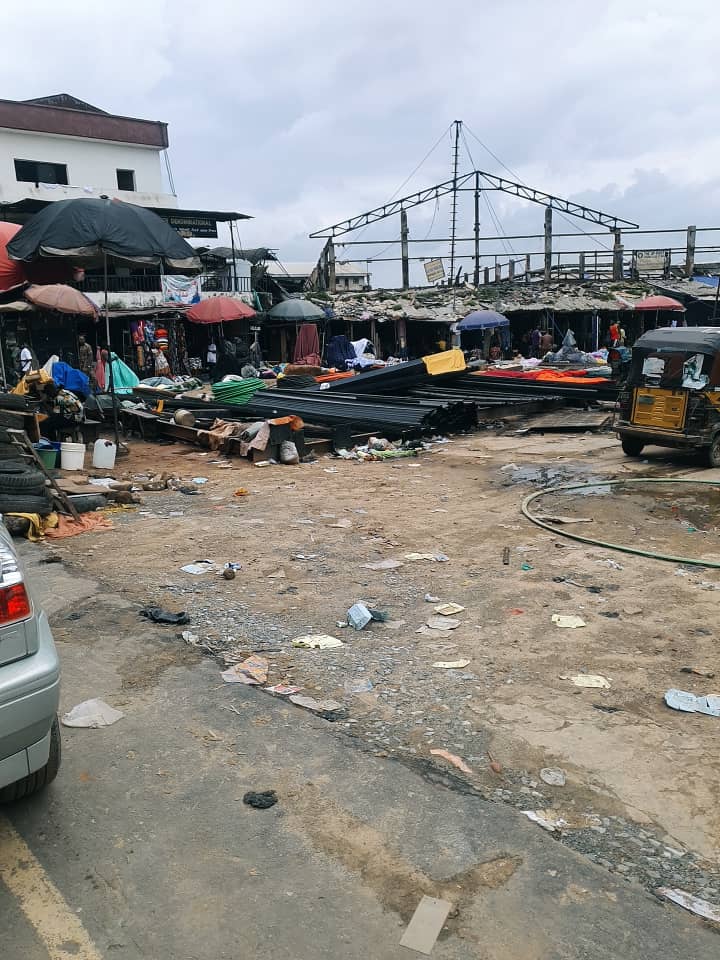
The ongoing reconstruction of Onitsha Main Market in Anambra State has received commendation from traders and residents, but the demolition of shanties and makeshift shops has left many small-scale traders struggling to rebuild their businesses and sustain their families.
For decades, Onitsha Main Market has remained one of Nigeria’s major commercial centres, providing livelihoods for thousands of traders and residents of surrounding communities.
Families in Fegge, Odoakpu, 3-3, Nkwelle, Okpoko in Ogbaru Local Government Area, as well as Nkpor and Oba in Idemili North and South Local Government Areas, among others, depend on activities in the market for their daily income.
The Anambra State Government is currently rebuilding the market as part of efforts to provide a cleaner, safer and more modern commercial environment.
The exercise, however, has led to the demolition of several shanties and makeshift shops, leaving many occupants without business premises.
This is the first major reconstruction of the market by a state government in recent years, with the aim of giving the facility a new and modern outlook.
The shanties were not part of the original design of the market. They emerged over the years as the number of traders increased and the available lock-up shops became insufficient.
Many traders who could not afford the cost of standard shops resorted to renting or constructing makeshift structures to carry out their businesses.
The Chairman of Onitsha Main Market, Mr. Chijioke Okpalugo, explained that many of the illegal structures emerged through the activities of some traders and past market leaders.
He said the administration of Governor Chukwuma Soludo was determined to restore the original beauty and standard of the market.
Mr. Okpalugo assured traders that the ongoing reconstruction would be completed by October this year.
Radio Nigeria gathered that the relatively low cost of renting shanties made them attractive to small-scale traders, particularly those from neighbouring communities and local government areas.
Two former occupants of the demolished structures, Mr. Echezona Asogwa and Mrs. Agnes Ifekauche, said they resorted to the makeshift shops because they could not afford the cost of standard business premises.
Following the demolition, some affected traders have relocated to nearby markets, including Relief Market and Bridge Head Market.
The sudden increase in demand for shops in these markets, however, has pushed up rental costs, making it difficult for some displaced traders to resume their businesses.
Two of the affected traders, Mrs. Ifeoma Nwafor and Mr. Chibuike Okoli, said they were facing serious financial challenges and were worried about meeting basic family needs, including feeding, payment of school fees and other household expenses.
The traders appealed to the Anambra State Government to provide affordable business spaces, consider payment by instalments or create temporary trading locations where affected traders could operate until the reconstruction is completed.
They also urged the government to ensure that the project was completed within the promised timeframe to enable them return to business as soon as possible.
Despite the hardship caused by the demolition, most of the traders interviewed acknowledged the need to rebuild Onitsha Main Market.
They expressed hope that the completed project would provide a cleaner, safer, more organised and modern commercial environment capable of supporting businesses and improving the economic activities of the market.