REPORTER: CHIKA EWURUM
Stakeholders and Civil Society Organisations have called for full financial autonomy for the judiciary to strengthen judicial independence and promote a more transparent justice system across West Africa.
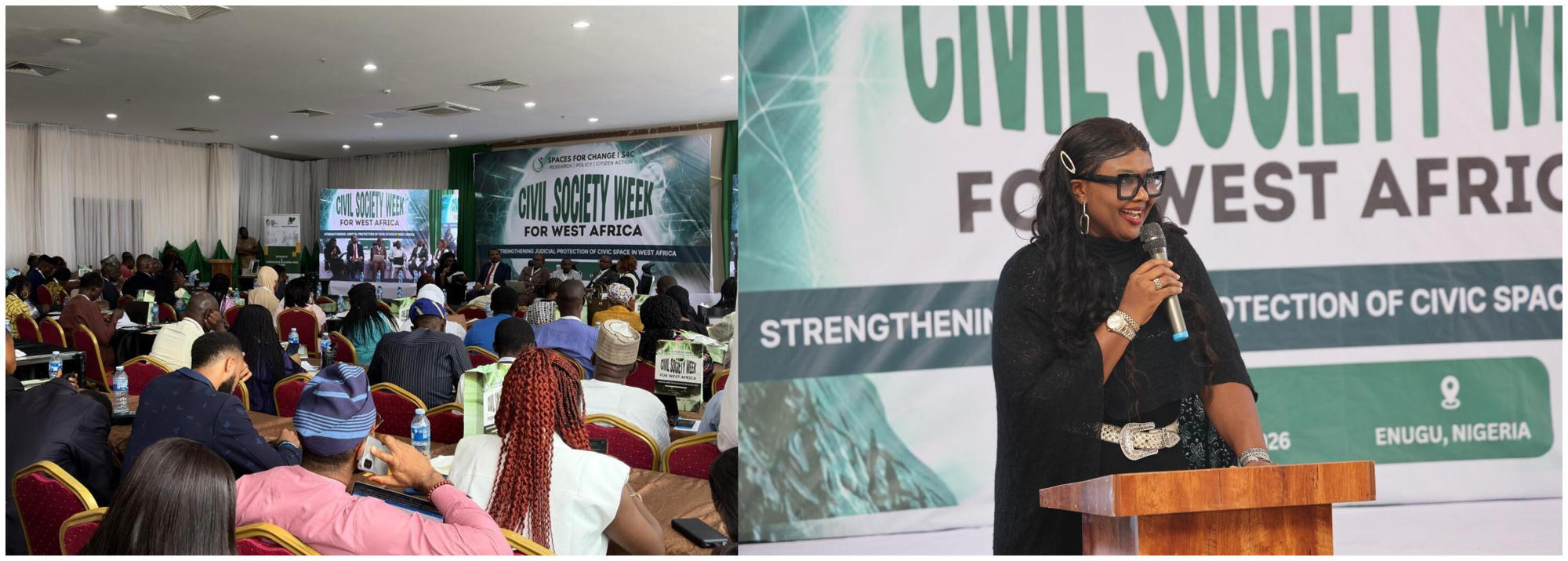
They made the call at a forum organised by Spaces for Change (S4C) in Enugu State as part of activities marking West Africa Civil Society Week.
In her opening remarks, the Executive Director of Spaces for Change, Victoria Ibezim-Ohaeri, expressed concern that courts, which are expected to protect fundamental rights and uphold justice, have increasingly been used by various executive institutions to suppress civil society across West Africa.
She stressed the need for the judiciary to be independent of the executive arm of government to enable it to perform its constitutional functions without interference.
Ibezim-Ohaeri explained that West Africa Civil Society Week was designed to examine critical issues affecting the activities of Civil Society Organisations and other stakeholders, including the media.
Retired Justice Nkemdilim Izuako acknowledged the enormous pressure and challenges facing the judiciary but maintained that many judges continue to uphold integrity.
She called for financial autonomy for the judiciary, describing it as a necessary step towards strengthening the country’s justice system.
Also speaking, a legal practitioner and former Chairman of the Nigerian Bar Association, NBA, Mr Folarin Aluko, said constitutional constraints had limited the independence of the judiciary.
According to him, the third arm of government has the capacity to strengthen its independence through transparency and accountability.
Aluko recalled that the judiciary lost public trust during the last general elections and expressed hope that it would take steps to restore confidence as the country prepares for the next elections.
Comparing Nigeria’s judicial system with that of Ghana, Justice Fredrick Tetteh of the Ghanaian High Court said the judiciary generates substantial revenue for the country but receives only a portion of what it generates to run the sector.
He noted that the extent of government interference could depend on the disposition of individual judges, although government interests could not be entirely ruled out.
Meanwhile, a member of a civil society organisation from Niger, Harouna Sally Abdoulaye, lamented the challenges confronting civil society organisations in his country.
He said CSOs faced restrictions on their activities under the military government, limiting their ability to operate freely.
The programme with the theme: Strengthening Judicial Protection of Civic Space in West Africa” was attended by civil society representatives, judges, and media practitioners from Nigeria, Ghana, Senegal, Togo, Mali, Burkina Faso, and Nigér.